






The Secret Language of Botanicals: Why Every Plant Tastes Different
Have you ever wondered why peppermint seems to make your mouth feel cold even though the drink itself is not colder? Or why ginger feels warm, while gentian leaves a bitterness that can linger long after you swallow?
Some of that comes from taste. Some come from aroma. And some of what we casually call “taste” is not taste at all -it’s your nervous system detecting cooling, heat, tingling, and other physical sensations.
Here, we will explain what botanical ingredients are, why each herb tastes so different, and how to taste them in your next herbal drink.
What Are Botanical Ingredients?
“Botanical” is a broad word for ingredients that come from plants.
That includes much more than leafy herbs. Flavor can come from the root, leaf, flower, fruit, seed, bark, wood, or another part of the plant.
Each part of the plant contains its own mixture of natural compounds, and those compounds determine whether we perceive something as bitter, tart, floral, cooling, spicy, earthy, or aromatic:
- Roots, such as gentian and ginger
- Seeds and pods, such as cardamom and star anise
- Leaves, such as peppermint, basil, and sencha tea
- Flowers, such as hibiscus and elderflower
- Fruits and berries, such as goji and aronia
Each part stores flavor in its own way. Roots tend to be earthy and bitter, while flowers and leaves are often light and fragrant.
Why Does Every Botanical Taste Different?
Every herb tastes different because every plant makes its own mix of natural compounds. Here is what is happening behind each flavor.
Plants Create Flavor to Protect Themselves
Plants are extraordinarily good chemists.
They produce thousands of specialized compounds for many reasons, including protecting themselves from insects and pathogens, responding to environmental stress, and communicating with other organisms. Many of the compounds humans experience as bitter, pungent, or intensely aromatic are part of those plant defense systems.
Each Plant Has Its Own Flavor Fingerprint
A single herb can hold dozens of aroma compounds, and some hold more than a hundred. The exact blend is what makes each plant unique.
Clove gets much of its recognizable spicy aroma from eugenol, a major component of clove essential oil. Eugenol has the warm, pungent smell most of us immediately associate with cloves.
Peppermint’s menthol activates a sensory receptor called TRPM8, which is also involved in detecting cool temperatures. That is why peppermint can make your mouth feel cool even though it has not actually lowered the temperature of your drink.
You are feeling part of the flavor.
Your Nose Does Much of the Tasting
When you swallow a sip, aromatic molecules travel from the back of your mouth toward the olfactory receptors in your nose. This is called retronasal olfaction, and it is a major reason food and drinks taste so much flatter when your nose is blocked.
The Five Flavor Families of Botanicals
Most botanical ingredients fall into one of five flavor families. Once you know them, you can pick out what you are tasting in almost any glass.
|
Flavor Family |
What You Notice |
Melati Botanicals That Bring It |
|
Bitter |
A dry, lingering finish |
Gentian and wormwood (Classic and Fresh) |
|
Warm and Spicy |
Warmth, pungency, and aromatic spice |
Ginger, cardamom, and star anise (Classic and Fresh); clove (Classic) |
|
Tart and Fruity |
Acidity, brightness, and ripe fruit |
Goji (Classic and Fresh); hibiscus and aronia (Classic); guava (Fresh) |
|
Fresh and Floral |
Herbal lift, cooling and fresh aroma |
Peppermint and basil (Classic and Fresh); elderflower (Fresh) |
|
Earthy and Roasted |
Depth, cocoa notes, and a tea-like dryness |
Cacao (Classic); sencha tea (Classic and Fresh) |
The best herbal drinks draw from several families at once. That is where real complexity comes from.
Why the Same Botanical Can Taste Different From One Drink to Another
Even one botanical can taste quite different depending on how it is grown and handled. A few things shape the final flavor:
- Where It Grows: Soil, sun, and climate change the chemical composition of a plant.
- Which Part Is Used: Coriander leaves and coriander seeds are a perfect everyday example. They come from the same plant but smell and taste remarkably different.
- Fresh vs Dried: Drying can reduce some volatile aromas while concentrating or transforming others. Ginger is a good example: fresh ginger and dried ginger do not have quite the same pungent chemistry.
- How the Flavor Is Drawn Out: Time, temperature, and liquid all decide what ends up in the glass.
At Melati, we steep botanicals in water for up to six weeks, then cold-extract them. This slow, gentle process protects their nutrition and flavor. You can meet each plant on our ingredients page.
Why Melati Takes Up to Six Weeks to Extract
At Melati, our botanicals are cold-extracted in water over a process that can take up to six weeks.
That is very different from steeping an herbal tea for five minutes or making an alcohol-based tincture.
The goal is not simply to make the drink taste “herbal.” We want the individual layers to work together: bitterness from roots, warmth from spice, brightness from fruit, herbal aroma from leaves, and enough structure that the drink still tastes complex once you pour it over ice and add bubbles.
That matters especially because Melati contains 0% alcohol.
In wine and spirits, alcohol itself contributes aroma, body, warmth, and length.
Take alcohol away, and the botanicals have to do more of the work.
How Botanicals Build a Drink Without Alcohol
Think about a good meal. You probably don’t want every dish to be salty or sweet. What makes the meal interesting is contrast and balance. Botanical drinks work the same way.
- Bitterness balances sweetness and acidity.
- Spice adds warmth.
- Fruit brings brightness.
- Floral notes lift the aroma.
- Tea and tannic berries give the drink a gentle grip.
Botanical spirits have relied on this teamwork for centuries. Vermouth even takes its name from wormwood, which is Wermut in German. In a non-alcoholic apéritif, botanicals do even more, because they also create the body and finish that alcohol usually provides.
The result is not twenty-one individual flavors shouting at you. When the blend works, you experience them in sequence. You smell one thing before you sip. You notice something else as the drink crosses your palate. Then another botanical appears on the finish.
That is why blending plants is as important as choosing them.
Melati Classic brings red fruits, bitter roots, and warm spices together for a bitter, herbaceous, and rich pour. Melati Fresh pairs guava, lime, basil, and peppermint with bitter gentian for a tropical, aromatic, and dry glass. Both speak the same botanical language, each with its own accent.


How to Taste Botanicals in Your Glass
You do not need a trained palate to enjoy botanicals. You just need to slow down a little. Pour 1 oz of Melati over plenty of ice, top with 3 to 4 oz of sparkling water, and try this:
- Smell first. Notice whether it smells like fruit, flowers, spice, or earth.
- Take a small sip and hold it. Let it spread across your tongue before you swallow.
- Notice the opening. Bright fruit and floral notes usually show up first.
- Feel the middle. This is where warmth and spice tend to appear.
- Wait for the finish. Bitterness from roots like gentian often lingers the longest.
Taste it again a few minutes later. As the ice melts, new notes open up. That small evening ritual turns every glass into a quiet conversation with the plants inside it.
FAQs
Why do bitter botanicals taste so strong?
Humans have about 25 types of bitter taste receptors, more than for any other taste. That makes us very sensitive to bitterness, even in small amounts.
Why does peppermint feel cold?
Menthol, one of the major compounds associated with peppermint, activates a receptor called TRPM8 that is also involved in sensing cool temperatures.
Your mouth therefore receives a cooling signal even when the temperature of the drink has not changed.
Why does ginger feel hot?
Ginger contains pungent compounds including gingerols and shogaols. These interact with sensory channels including TRPV1 and TRPA1, helping create the warming or tingling sensation we associate with ginger.
What are botanical spirits?
Botanical spirits are beverages whose character comes substantially from plant ingredients such as herbs, roots, seeds, fruits, flowers, bark, and spices.
Gin, amaro, and vermouth are familiar alcoholic examples. Botanical drinks can also be completely alcohol-free.
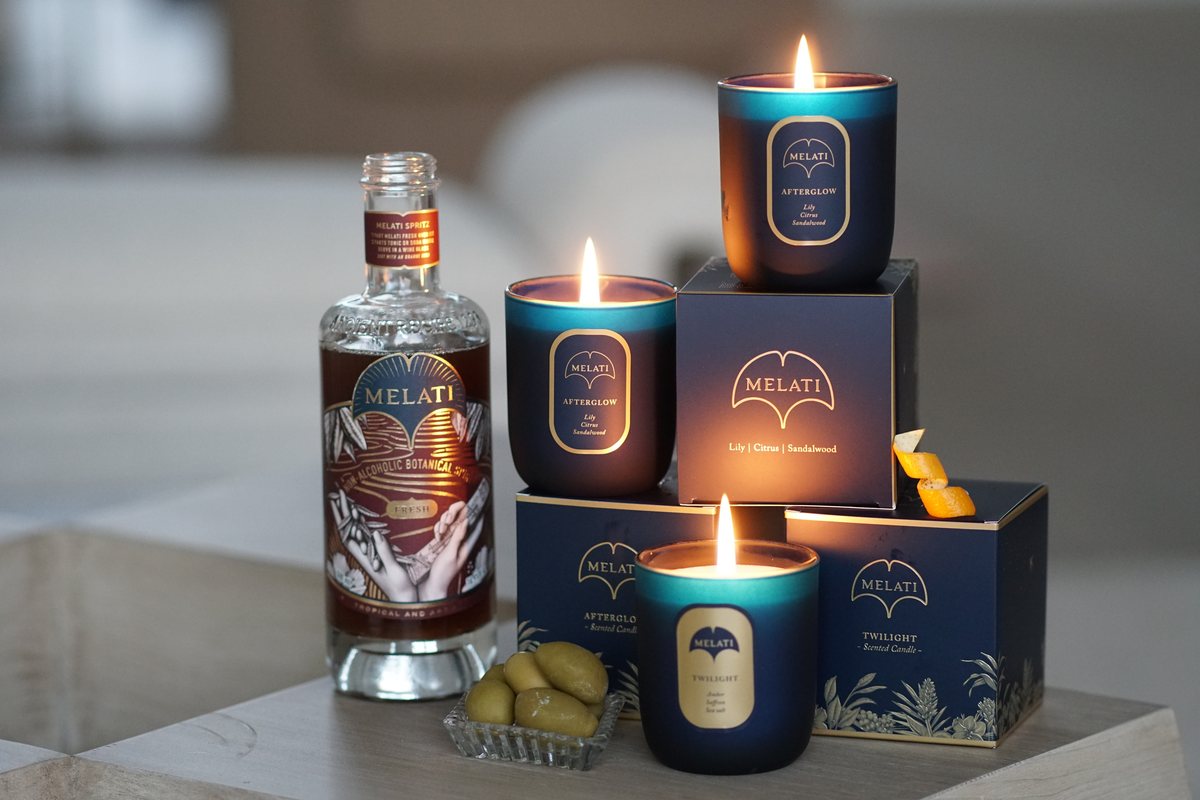
Melati is a 0% botanical drink.
Which Melati should I try first?
If you enjoy red wine or dark spirits, start with Melati Classic. If you prefer white wine or clear spirits, Melati Fresh is a natural fit.
Is Melati alcohol-free?
Yes. Melati contains 0% alcohol, and alcohol is not used during the extraction process. It is made from more than 20 plants, with no added sugar and no preservatives.
Taste the Language of Botanicals With Melati
What do you smell before you take the first sip? What actually touches your tongue? What feels cooling or warming? And what is still there ten seconds after you swallow?
Melati brings that language into a beautiful evening ritual. Crafted for health and sipped for pleasure, each bottle lets its botanicals speak together in perfect balance.
Explore the Melati Collection to taste Classic and Fresh side by side, and find the botanical blend you love most.